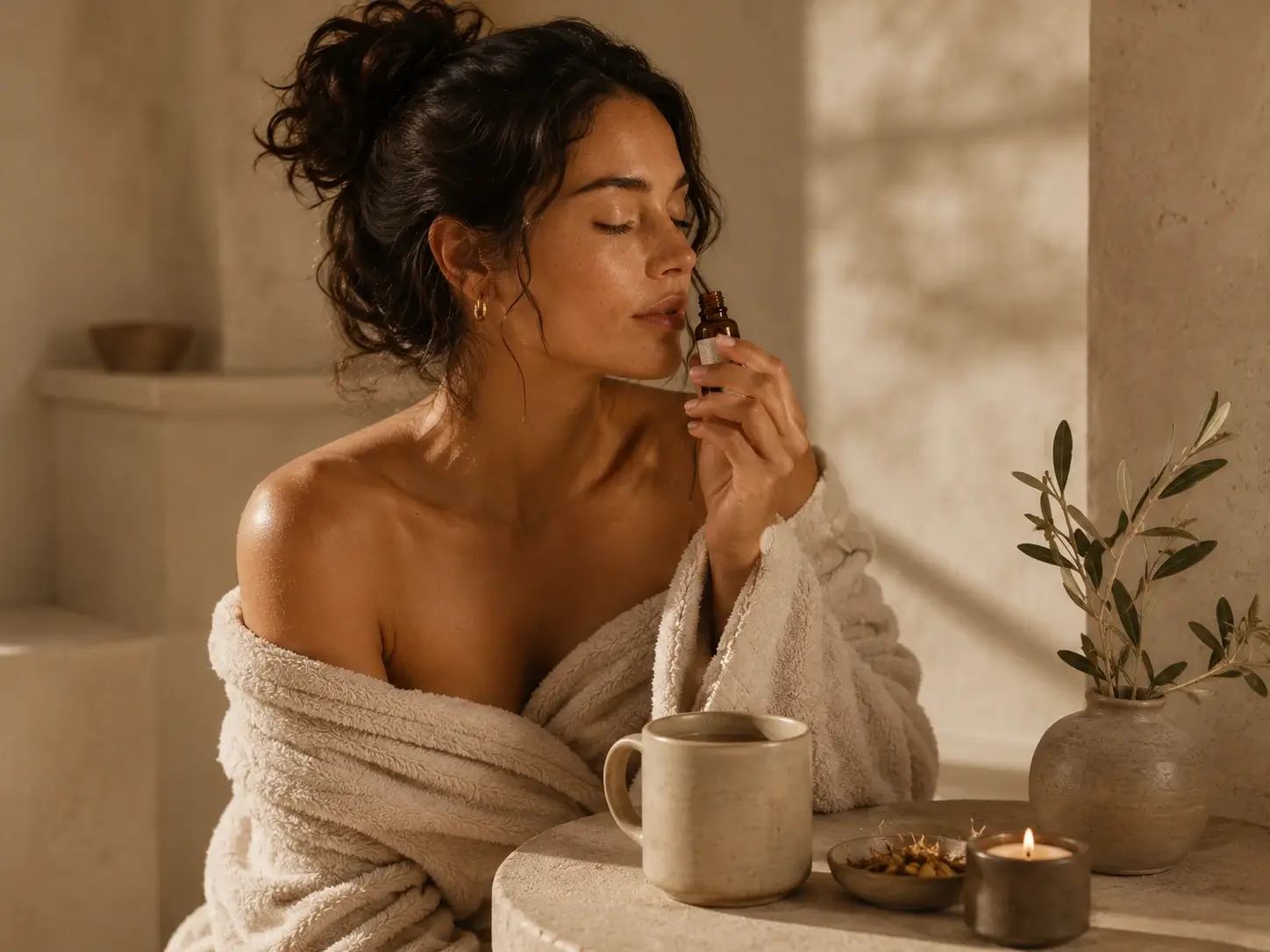
A stress relief aroma routine gives your body a simple way to recognize pause. Stress often builds before you name it. Your shoulders rise. Your breathing gets shallow. Your jaw tightens. Your thoughts start moving faster than the moment requires. Scent can interrupt that pattern in a gentle, sensory way. It does not solve every problem, and it should not be treated as a cure. Instead, it creates a small ritual that helps you return to yourself. When used with breathing, slower movement, and environmental changes, aroma can become a practical part of daily stress management.
A stress relief aroma routine works best when you repeat it often enough for the scent to become familiar. The brain starts connecting that aroma with slowing down. This association can make a small ritual feel more powerful over time. You might use the same scent before journaling, after work, or during a quiet breathing practice. The routine becomes a cue, not just a fragrance. A clear stress relief aroma routine helps you choose when and how to use scent. Structure matters because stress often makes decisions feel harder.
Before choosing a scent ritual, notice how stress usually arrives in your body. Some people feel it in the chest. Others feel it in the stomach, shoulders, face, or hands. Some notice mental signs first, such as impatience or scattered attention. These patterns can guide your ritual. If stress appears during work, use a discreet method. If it appears at night, create a slower evening practice. If it appears in transitions, place scent near those moments. This makes your routine more targeted. You are not adding aroma randomly. You are placing support where your day actually needs it.
A stress relief aroma routine for midday should be quick, clean, and easy to use. A personal inhaler can work well because it does not fill a shared room. A lightly scented balm may help if your workplace allows fragrance. A brief diffuser session may suit a home office. Use the scent with a short reset. Sit back, lower your shoulders, inhale slowly, and exhale longer than you inhale. Repeat this several times. A daily wellness aroma ritual should fit between responsibilities. It should help you continue with more steadiness.
An evening routine can be more spacious than a workday ritual. You might use aroma while taking a bath, changing clothes, stretching, or preparing your skincare. Choose scents that feel warm, soft, or emotionally quiet. Keep the lighting gentle. Reduce background noise if possible. Let the ritual mark the end of active problem-solving. This is especially helpful for people who carry work energy into the night. A calm scent can create a symbolic closing. It gives the body a different atmosphere. Over time, your evening routine may become something you look forward to after demanding days.
A stress relief aroma routine should not overwhelm your senses. Strong fragrance can become irritating, especially when you already feel tense. Start with a low amount and increase only if needed. Open windows when diffusing. Avoid mixing too many scents at once. Keep blends simple until you know what works. If you share your home, consider how others respond to aroma. Pets and children may need extra caution. A thoughtful holistic self-care ebook can help you approach scent with more care. Comfort should guide every choice.
Scent becomes more useful when paired with body-based habits. Try using aroma before stretching your neck, rolling your shoulders, or unclenching your hands. You might also pair it with a short walk, warm shower, or breathing exercise. Stress often lives in the body, so physical release matters. Aroma adds atmosphere and memory to that release. The ritual becomes richer because several senses are involved. A mindful aromatherapy routine should invite awareness instead of simply covering discomfort with fragrance. That difference makes the practice feel more grounded.
A stress relief aroma routine should support your real emotional life. Some days need brightness. Other days need softness. Some days need silence more than scent. Let your routine adapt without guilt. Keep a few trusted aromas instead of forcing yourself to use many. Notice which scents help you breathe more fully. Notice which ones feel distracting. Your preferences may change with seasons, hormones, workload, or grief. That is normal. A useful routine leaves room for those changes. When aroma becomes part of honest self-care, it offers comfort without pretending that life is always calm.


Leave a comment